From Staging Marshal Rules Wiki
Jump to navigation
Jump to search
Weapon Standards
General
- The only permitted weapons are steel constructed longswords (bastard swords) and arming swords (broad swords and saber style).
- Swords from a reputable supplier are recommended, and they must meet the minimums outlined in Minimum Weapon Standards.
- Should a marshal have a question about a weapon it may be subjected to the following:
- Spring test: Can the weapon be bent over the knee (3 inches) without permanent distortion? (returns/springs back to straight or true).
- Strike test: Marshal strikes a steel object (could be a helmet, could be a block of steel) with a reasonable degree of force to make sure weapon doesn't shatter.
- Weapons shall be in good condition with the edges having been rounded, burrs removed and no chips or dents that compromise the integrity of the weapon.
- Swords may have basket hilts in conjunction with rigid constructed demi-gauntlets. Baskets shall be constructed to provide all of the protection required of a gauntlet.
- Arming Swords shall have a lanyard to keep them from leaving the fighter's person.
- The cross guard of all weapons shall not extend more than 35 mm from the gauntlet. This is to be measured as show in the diagram below.
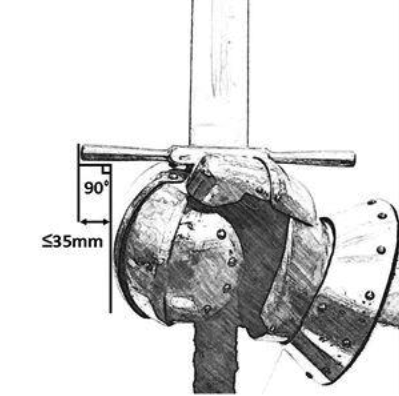
- The following weapons are prohibited:
- Weapons with a tip less than 20 mm diameter
- Axes (one-handed or two-handed)
- Maces
- Polearms
- Falchions
- Katanas
- Any weapon may be rejected for cause by the inspecting marshal.
Minimum Weapon Standards
|
|
Arming Sword/Broad Sword
|
Long Sword/Bastard Sword
|
| Max weight
|
1.7 kg
|
2.3 kg
|
| Minimum length
|
72 cm
|
100 cm
|
| Maximum length
|
100 cm
|
140 cm
|
| Min. handle length
|
12 cm
|
20 cm
|
| Max. handle length
|
20 cm
|
40 cm
|
| Blade thickness
|
Min 2 mm
|
Min 2 mm
|
| Tip diameter
|
20 mm
|
20 mm
|
| Additional requirements
|
Arming sword/ side sword styles only
|
European two-handed/ long sword styles only
|
